Overview

Materials Science and Engineering is a cutting-edge discipline that explores the properties, design, and applications of materials used in modern technology. This interdisciplinary field combines principles from physics, chemistry, and engineering to develop advanced materials that drive innovations in areas such as electronics, aerospace, biotechnology, energy, and sustainable manufacturing.


MS&E Degree Programs

Program MS (Non-Thesis) MS Ph.D.
Materials Science & Engineering      
Two students researching in the lab at FAMU-FSU College of Engineering

Research

We capitalize on the study and application materials to optimize their performance, whether it's creating stronger, lighter composites for aviation, more efficient semiconductors for electronics, or environmentally friendly materials for energy storage.


Graduate

Advanced degrees from the Department of Materials Science & Engineering prepare students for high-level jobs in industry, research and higher education (faculty).

Graduate Admissions

Materials Science Professor's Crystal Research and Exhibit

Assistant Professor William Meier grows crystals in his materials science and engineering lab to study fundamental physics. These crystals end up in technologies like microchips, lasers, quantum sensors and fusion reactor components.
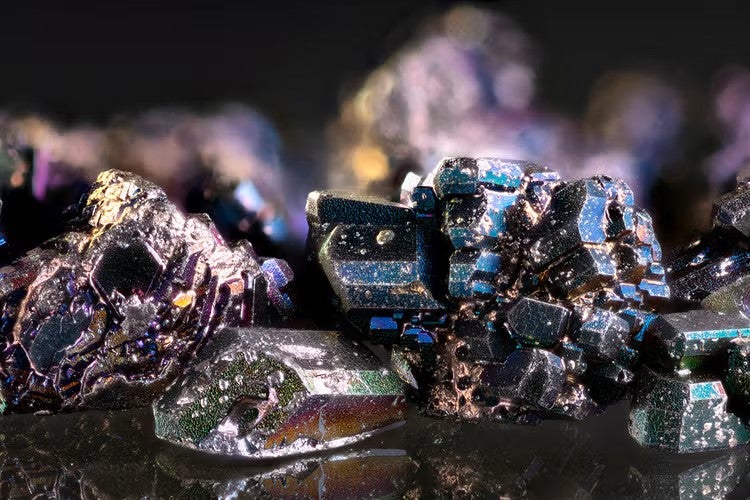
Macro photography of a metal alloy sample containing Scandium, Vanadium and Tin
MS&E Research Facilities
Applied Superconductivity Center (ASC)
National High Magnetic Field Laboratory (NHMFL)
Research at the Applied Superconductivity Center

The Applied Superconductivity Center (ASC) advances the science and technology of superconducting magnets, working from atomic-scale fundamentals through complex conductors to constructing the highest-field superconducting magnets yet made. 

Anbdre Juliao, left, a 4th year Grad student working on his Ph.D. and Lance Cooley, Ph.D., a Professor of Mechanical Engineering and Director, Applied Superconductivity Center (ASC) observing a thin-film deposition of niobium for high-field cavities for Axion dark matter detection.