
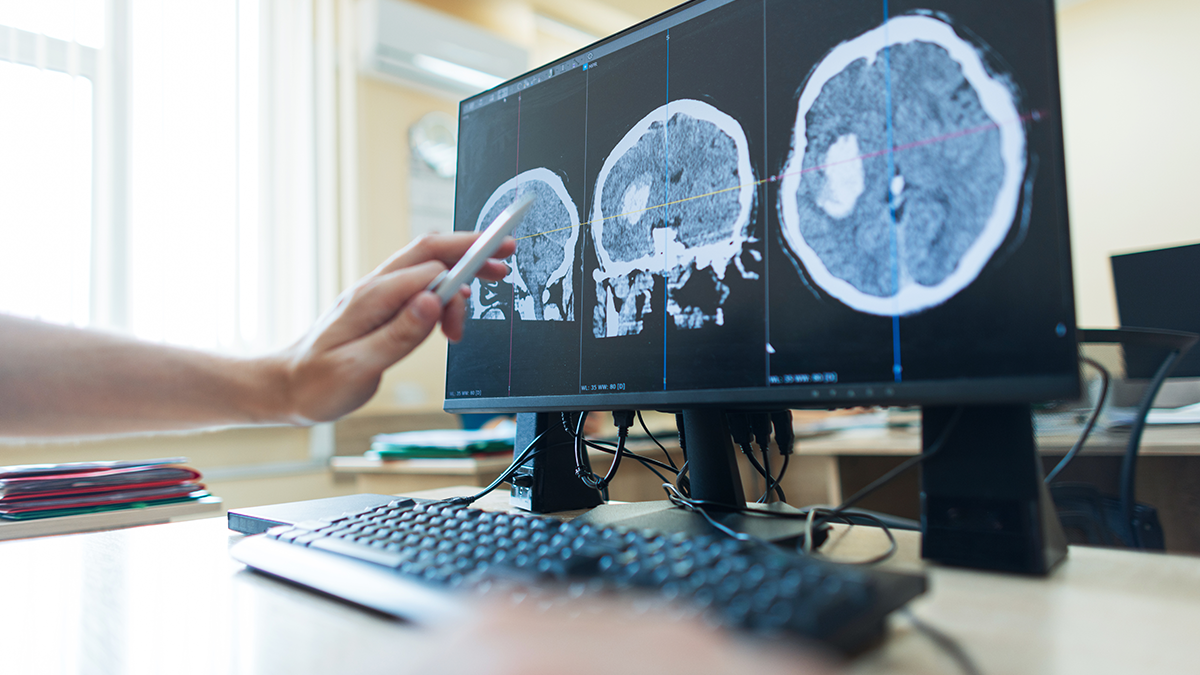
New biomedical engineering research by Professor Yan Li could pave the way for innovative stroke treatments using the body’s own repair mechanisms. (By alones for AdobeStock)
Key Points
Yan Li, the Simon Ostrach Professor of Engineering and Professor of Chemical and Biomedical Engineering at the FAMU-FSU College of Engineering, has received a $2.24 million grant from the National Institute of Neurological Disorders and Stroke, part of the National Institutes of Health.
Her team is engineering extracellular vesicles, microscopic particles released by cells, from human stem cell-derived microglia, the brain’s resident immune cells. The goal is a cell-free treatment for ischemic stroke that calms harmful inflammation and supports tissue repair.
Li is collaborating with the National High Magnetic Field Laboratory and the Florida State University College of Medicine in Tallahassee, Florida, and the team will test the vesicles on 3D brain organoids, which are miniature lab-grown models of human brain tissue.
Imagine a future where stroke survivors bounce back faster, thanks to healing messages sent by tiny biological packages inside the brain.
That’s the vision behind a new $2.24 million study led by Yan Li, the Simon Ostrach Professor of Engineering and Professor of Chemical and Biomedical Engineering at the FAMU-FSU College of Engineering. The National Institute of Neurological Disorders and Stroke (NINDS), part of the National Institutes of Health (NIH), is funding the work.

Li is teaming up with the National High Magnetic Field Laboratory and the Florida State University College of Medicine to reimagine recovery from stroke and other neurological disorders.
“We are engineering and bio-manufacturing human stem-cell-derived microglia extracellular vesicles to treat ischemic stroke,” said Li, lead researcher for the project.
What are microglia and extracellular vesicles?
Microglia and extracellular vesicles (EVs) work together like specialized teams of cells and their mail carriers. Think of microglia as permanent resident workers and EVs as a package-delivery network that cells use to send messages. Lab-grown microglia naturally release EVs, microscopic packages that ferry proteins, fats and microRNAs to neighboring cells.
That cargo can calm inflammation and encourage regrowth, which may change how the brain recovers from a stroke.
“The human stem cell-derived microglia extracellular vesicles contain therapeutic protein and microRNA cargo to treat stroke,” Li said. “They also can cross blood-brain barriers and have low immunogenicity. Their natural capacity to promote repair and restore balance could transform how we treat some of the most challenging diseases.”
How does Li’s team grow brain immune cells in the lab?
Microglia, the brain’s resident immune cells, play a crucial role in maintaining healthy brain tissue. There are two types: M1, which promotes inflammation and can worsen injuries, and M2, which soothes inflammation and supports tissue repair. The key to Li’s approach lies in harnessing the restorative powers of the M2 state.
Extracting microglia from human brains is a daunting task. Instead, Li’s team reprograms ordinary adult skin or blood cells into stem cells, then coaxes those stem cells into becoming microglia-like cells in the lab. The result is a renewable supply of M2 microglia, primed to deliver help where it’s needed most.
Why does this research matter for stroke patients?
Every year, ischemic stroke strikes without warning, often taking away a person’s speech, movement or independence. Current treatments are limited, and many survivors face a long, uncertain road back. Li’s team is harnessing the body’s own healing signals, packaged in these tiny vesicles, to tip the odds in favor of recovery.
After a stroke, the brain’s immune response can help or harm. The team is designing vesicles that turn down inflammation and turn up repair.
How will the researchers test the vesicles?
The next step is to produce these vesicles at scale and put them to the test. Li’s lab, with partners at the FSU College of Medicine and the National High Magnetic Field Laboratory, will study their effects on 3D brain organoids, miniature models of human brain tissue used to evaluate stroke injury and repair.
The researchers will observe how the EVs affect the organoid environment. Do they reduce inflammation? Do they promote neuronal regrowth? The answers could point toward a cell-free stroke therapy that draws on the body’s natural repair mechanisms without the risks of transplanting living cells.
What is the long-term goal of the project?
“The ultimate goal of this research is to develop cell-free therapeutics for translational stroke treatment,” Li said.
If the work succeeds, the team could turn laboratory discoveries into practical medicine that helps stroke survivors recover.
Editor’s Note: This article was edited with a custom prompt for Claude Opus 5.5, an AI assistant created by Anthropic. The AI optimized the article for SEO/GEO discoverability, improved clarity, structure and readability while preserving the original reporting and factual content. All information and viewpoints remain those of the author and publication. This article was edited and fact-checked by college staff before being published. This disclosure is part of our commitment to transparency in our editorial process. Last edited: 10-12-26.
RELATED ARTICLES
Researchers Use 3D Culture Techniques to Develop Improved Therapy for Neurological Diseases
Stem Cell-Derived Vesicles Show Early Promise for Stroke Recovery, With Possible Sex Differences
FAMU-FSU Engineering Joins Mayo Clinic to Research Alzheimer’s Disease Treatments
FAQ
Extracellular vesicles are microscopic packages that cells release to communicate with other cells. They carry cargo such as proteins, fats and microRNAs. Researchers are studying them as possible therapies because they can deliver molecular signals without transplanting living cells.
Microglia are the brain’s resident immune cells. There are two types: M1, which promotes inflammation and can worsen injury, and M2, which calms inflammation and supports tissue repair. After a stroke, the balance between these responses can help or harm recovery.
The National Institute of Neurological Disorders and Stroke, part of the National Institutes of Health, awarded $2.24 million to Yan Li, the Simon Ostrach Professor of Engineering and Professor of Chemical and Biomedical Engineering at the FAMU-FSU College of Engineering. Her team is engineering extracellular vesicles from human stem cell-derived microglia as a potential cell-free treatment for ischemic stroke.
Professor Yan Li’s team at the FAMU-FSU College of Engineering reprograms ordinary adult skin or blood cells into stem cells. The team then guides those stem cells to become microglia-like cells in the lab, creating a renewable supply of the repair-promoting M2 type.
A cell-free therapy uses products that cells release, such as extracellular vesicles, instead of transplanting living cells into a patient. Researchers at the FAMU-FSU College of Engineering are pursuing this approach for ischemic stroke because it may avoid some risks of living-cell transplants. The work is at the laboratory stage.
Brain organoids are miniature, three-dimensional models of human brain tissue grown in the lab from stem cells. Researchers at the FAMU-FSU College of Engineering, the FSU College of Medicine and the National High Magnetic Field Laboratory will use them to evaluate stroke injury and test whether engineered vesicles reduce inflammation and promote neuron regrowth.