
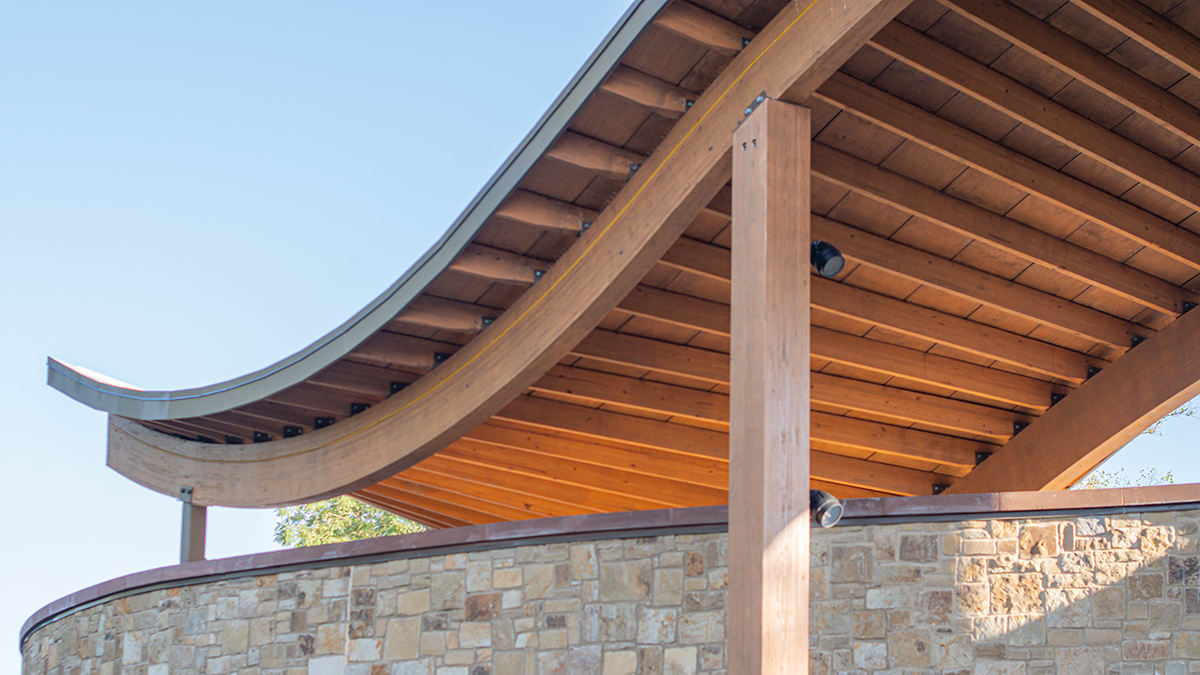
New civil engineering research shows wave-shaped roofs withstand hurricane-force winds better than traditional designs. (By Stock fresh for AdobeStock)
Key Points
Civil engineering research at the FAMU-FSU College of Engineering tested wave-shaped roof and wall designs on 3D-printed models of low-rise buildings.
The team, led by Assistant Professor Pedro Fernández-Cabán with Associate Professor Qian Zhang, measured wind pressures in a wind tunnel at the college.
The model with the deepest wave pattern reduced peak wind pressures near roof and wall corners by 40% to 60% compared with flat designs. Corners and edges are where hurricane winds typically cause the most damage, so reshaping building surfaces could offer engineers a new way to reduce wind loads.
Wind tunnel tests at the college found wave-shaped roofs and walls on low-rise building models lowered peak pressures near corners, where hurricane damage often starts.
Civil engineering research led by the FAMU-FSU College of Engineering’s Department of Civil and Environmental Engineering shows that wave-shaped patterns on exterior walls and roofs can help low-rise buildings better withstand hurricane-force winds. In wind tunnel tests at the college, the designs cut peak wind pressures near roof and wall corners by up to 60%.
The study, published in the journal Engineering Structures, examined how these nonconventional shapes reduce wind loads. The findings could help architects and engineers design stronger structures.
“Changing a building’s shape can significantly reduce the intensity of wind forces it has to withstand,” said Pedro Fernández-Cabán, lead author of the study and an assistant professor of civil engineering at Florida State University and the FAMU-FSU College of Engineering. “These nonconventional building shapes reduce the damage from worst-case severe weather scenarios. It’s another tool for engineers and designers to protect against wind damage.”

How did researchers test wave-shaped roofs and walls?
The research team fabricated 3D-printed wind tunnel models of low-rise buildings equipped with wave-shaped exterior roof and wall systems, rather than traditional flat surfaces. They evaluated wave amplitudes between 5% and 10% of the building height against conventional flat designs and collected wind pressure data on the surface of the models.
Using a wind tunnel at the FAMU-FSU College of Engineering, the researchers measured how pressures varied with wind direction. The model with the greatest wave depth proved most effective at reducing wind-load effects. It lowered peak wind pressures by 40% to 60% near the roof and wall corners across multiple wind directions.
How do curved building surfaces reduce wind damage?
Curving structural surfaces can prevent destructive vortices by eliminating the pockets where high suction loads typically form. Instead of sweeping smoothly over flat walls or pitched roofs, the wind encounters wave-like contours, a series of rounded hills and valleys that disrupt its flow.
The air skips across these undulating surfaces like a stone bouncing on a lake. That motion breaks up pressure zones and redirects wind away from the building envelope.

Why do hurricane winds damage roof corners and edges first?
When wind interacts with structures, the rapid movement of air across a surface can create an area of low pressure. Higher air pressure underneath or inside a structure pushes the surface outward toward the low-pressure zone. The strongest forces develop at the corners and edges of the roof, where vortices congregate and threaten structural integrity.

Why does wind-resistant building design matter?
Battling wind pressure is an ongoing challenge in structural design. Exterior architectural features such as rounded corners, sloped walls and setbacks help reduce wind loads. Another wind mitigation strategy is to make walls thicker or sturdier with more or tougher material.
These techniques can be effective but expensive. Design and site constraints rule out some features, and adding them to existing structures can be impractical.
This research shows the possibility of adopting building facades with nontraditional shapes to protect against wind damage.
How does this civil engineering research apply to other fields?
The aerodynamic findings reach past structural engineering. The underlying fluid dynamics and vortex behavior are relevant to other fields that study turbulent flows, including aeronautics, environmental science and fundamental physics.

“We’re dealing with air, and other engineers and scientists might be dealing with waves and water, but the understanding of fluid dynamics can inform design and engineering across fields,” Fernández-Cabán said. “Aerodynamic optimization requires a multidisciplinary approach that balances structural safety, resilience, material efficiency and performance.”
What comes next for the research team?
This study measured the wind pressure acting on the surface of the wave-shaped models. The team is now conducting additional experiments to better understand the wind flows around these envelope systems.
The researchers also plan to use computational fluid dynamics modeling to further refine the wave patterns and explore other surface geometries not tested in the wind tunnel.
Who conducted the study?
Fernández-Cabán led the study with co-authors from the college’s Department of Civil and Environmental Engineering: Associate Professor Qian Zhang, doctoral student Arezoo Bakhshizadeh and alumnus Peter Tsouroukdissian. The work was supported by Florida State University and the FAMU-FSU College of Engineering.
Editor’s Note: This article was edited with a custom prompt for Claude Opus 5.5, an AI assistant created by Anthropic. The AI optimized the article for SEO/GEO discoverability and improved clarity, structure and readability while preserving the original reporting and factual content. All information and viewpoints remain those of the author and publication. This article was edited and fact-checked by college staff before being published. This disclosure is part of our commitment to transparency in our editorial process. Last edited: 10/7/26.
RELATED ARTICLES
Engineering Professor Earns Fulbright Award to Study Urban Wind and Climate in Santiago, Chile
Scientists to study how a cityscape affects wind damage to buildings
Civil Engineering Professor Awarded NSF Early CAREER Grant for Novel Wind Research
FAQ
Yes, according to civil engineering research at the FAMU-FSU College of Engineering. Wave-shaped exterior walls and roofs on low-rise building models reduced peak wind pressures near corners by 40% to 60% compared with conventional flat surfaces in wind tunnel tests.
Wave-shaped surfaces have rounded hills and valleys that disrupt airflow. Instead of sweeping smoothly over a flat roof, wind skips across the contours, which breaks up the low-pressure zones and vortices that create high suction loads at corners and edges.
Fast-moving air over a roof creates low pressure above the surface while higher pressure underneath or inside pushes the roof outward. The strongest of these forces form at corners and edges, where swirling vortices gather.
The study was led by Pedro Fernández-Cabán, assistant professor of civil engineering at the FAMU-FSU College of Engineering in Tallahassee, Florida. Co-authors from the college’s Department of Civil and Environmental Engineering include Associate Professor Qian Zhang, doctoral student Arezoo Bakhshizadeh and alumnus Peter Tsouroukdissian. It was published in Engineering Structures.
The team built 3D-printed models of low-rise buildings with wave amplitudes between 5% and 10% of the building height. They tested the models alongside flat-surfaced versions in a wind tunnel at the FAMU-FSU College of Engineering and measured surface wind pressures from multiple wind directions.
The researchers are running additional experiments to study wind flow around wave-shaped buildings. They also plan to use computational fluid dynamics modeling to refine the wave patterns and test surface shapes not yet evaluated in the wind tunnel.