

By Supatman for AdobeStock
Key Points
The FAMU-FSU College of Engineering has awarded $400,000 in grants to create two Engineering Intelligence Testbeds, shared research platforms that link artificial intelligence with data, computing, simulation and physical experiments.
Associate Professor Kourosh Shoele and Professor Hui Wang lead one testbed, which focuses on AI-enabled digital twins for manufacturing and temperature-critical energy systems. Associate Professor Olugbenga Moses Anubi leads the other, which applies physics-grounded AI to protecting critical infrastructure systems.
Both projects will run over two years in partnership with Oak Ridge National Laboratory and industry, and they align with the Genesis Mission, a federal AI research initiative launched in 2025.
The FAMU-FSU College of Engineering is expanding its research driven by artificial intelligence with $400,000 in grants to establish two Engineering Intelligence Testbeds.
The initiative will support two faculty research proposals over the next two years and aims to position the college at the forefront of AI-enabled engineering in the United States. The college’s goal is to establish leading expertise in critical areas, build interdisciplinary teams and work with industry and government partners to solve grand challenges and speed technology transfer into U.S. industries.

What is engineering intelligence?
Engineering intelligence sits at the intersection of two ideas: AI for engineering, which uses artificial intelligence to improve design, simulation and optimization, and engineering for AI, which develops the engineering infrastructure that intelligent, scalable systems need. Together, these approaches will change how researchers take on complex engineering problems, grounding new work in both advanced computation and practical experimentation.
“These testbeds will empower our faculty and students to push the boundaries of what’s possible in engineering,” said Richard Liang, associate dean for research at the college. “By integrating AI with engineering disciplines and industrial needs, we’re building a foundation for breakthroughs that will resonate far beyond our campus and increase the U.S. competitiveness in some critical areas.”
How will the Engineering Intelligence Testbeds work?
The testbeds are designed as shared platforms that encourage collaboration across departments and research centers, with workflows that connect data, models, computing, simulation and hands-on experimentation. The initiative aligns with the Genesis Mission, a national effort led by the U.S. Department of Energy to accelerate scientific discovery through AI-powered research infrastructure, launched by executive order on Nov. 24, 2025.
Each testbed is required to partner with industry and with Oak Ridge National Laboratory, a Department of Energy national laboratory in Tennessee, so that projects stay connected to real-world applications and federal priorities. The college expects the selected proposals to raise its national profile, attract external funding and open partnerships with government agencies and industry leaders.

(Mark Wallheiser/FAMU-FSU College of Engineering)
Which research projects received testbed funding?
How will AI-enabled digital twins support manufacturing and energy research?
The first project, “Engineering Intelligence Testbed for AI-Enabled Digital Twins of Manufacturing and Temperature-Critical Energy Systems,” is led by Associate Professor Kourosh Shoele and Professor Hui Wang. It brings together 11 faculty members across the college, along with Oak Ridge National Laboratory and Astro America, a nonprofit that works with industry, government and academic partners to develop advanced manufacturing accelerators across the United States.
“AI should do more than analyze data after an experiment. It should help guide what happens next,” Shoele said. “This grant will help us connect physical experiments with intelligent digital twins, accelerating discoveries in energy systems, advanced manufacturing and aerospace applications while creating exciting new research opportunities for our students.”

(Mark Wallheiser/FAMU-FSU College of Engineering)
“What excites me about this testbed is the opportunity to move beyond using AI simply as a black-box prediction tool as regular machine learning does,” Wang said. “We want multiple AI agents to work together across experiments, simulations and data. This approach will help researchers diagnose why a system behaves the way it does, evaluate competing explanations and determine the most informative next step or generate or update scientific hypotheses. By keeping physics, uncertainty and human oversight in the loop, we can build AI-enabled engineering workflows that are more autonomous and reliable.”
How will the second testbed strengthen cybersecurity for critical infrastructure?
The second project, “A Modular, Extensible Engineering Intelligence Testbed for Physics-Grounded AI Research in Critical Infrastructure Systems,” is led by Associate Professor Olugbenga Moses Anubi. It involves four faculty members across the college and will support ongoing collaboration with GE Vernova, as well as with Oak Ridge National Laboratory through its Joint Faculty Appointment Program.
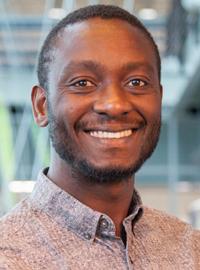
(Mark Wallheiser/FAMU-FSU College of Engineering)
“This investment will enable us to establish a federated testbed spanning multiple engineering domains, integrating cyber, hardware and software components through an approach we call Cyber-Hardware-in-the-Loop,” Anubi said. “By facilitating intelligence sharing across these domains, this capability will help advance and scale cyber-physical security technologies beyond current limitations. It will also strengthen our ability to support both ongoing and future large-scale initiatives to protect critical infrastructure from malicious actors.”
With these investments, the FAMU-FSU College of Engineering is building a base for AI-driven engineering research that carries discoveries from the lab into real-world use.
Editor’s Note: This article was edited with a custom prompt for Claude Opus 5.5, an AI assistant created by Anthropic. The AI optimized the article for SEO/GEO discoverability, improved clarity, structure and readability while preserving the original reporting and factual content. All information and viewpoints remain those of the author and publication. This article was edited and fact-checked by college staff before being published. This disclosure is part of our commitment to transparency in our editorial process. Last edited: Oct. 27, 2026.
RELATED ARTICLES
Engineering Undergraduates Publish AI Research on Patient Privacy and Chip Design
Researchers Use Artificial Intelligence to Find Road Safety Issues in School Zones
FAQ
They are two shared research platforms funded by $400,000 in grants from the FAMU-FSU College of Engineering, the joint engineering college of Florida A&M University and Florida State University. Over two years, each testbed will connect artificial intelligence with data, computing, simulation and hands-on experiments.
Engineering intelligence combines AI for engineering, which uses artificial intelligence to improve design, simulation and optimization, with engineering for AI, which builds the infrastructure intelligent systems need to operate reliably at scale.
Associate Professors Kourosh Shoele and Hui Wang lead a testbed on AI-enabled digital twins for manufacturing and energy systems that involves 11 faculty members. Associate Professor Olugbenga Moses Anubi leads a four-faculty testbed on physics-grounded AI for critical infrastructure.
The Genesis Mission is a national initiative led by the U.S. Department of Energy and launched by executive order on Nov. 24, 2025, to accelerate scientific discovery with AI. The FAMU-FSU testbeds align with its focus on AI-powered research infrastructure.
Both testbeds partner with Oak Ridge National Laboratory, a Department of Energy national laboratory in Tennessee. The digital twin testbed also works with Astro America, a nonprofit that develops advanced manufacturing accelerators with industry, government and academic partners. The critical infrastructure testbed collaborates with GE Vernova and with Oak Ridge through its Joint Faculty Appointment Program.
Associate Professor Olugbenga Moses Anubi of the FAMU-FSU College of Engineering leads a testbed that uses an approach he calls Cyber-Hardware-in-the-Loop. It integrates cyber, hardware and software components across engineering domains in a single federated testbed. The goal is to advance cyber-physical security technologies that protect critical infrastructure from malicious actors.