
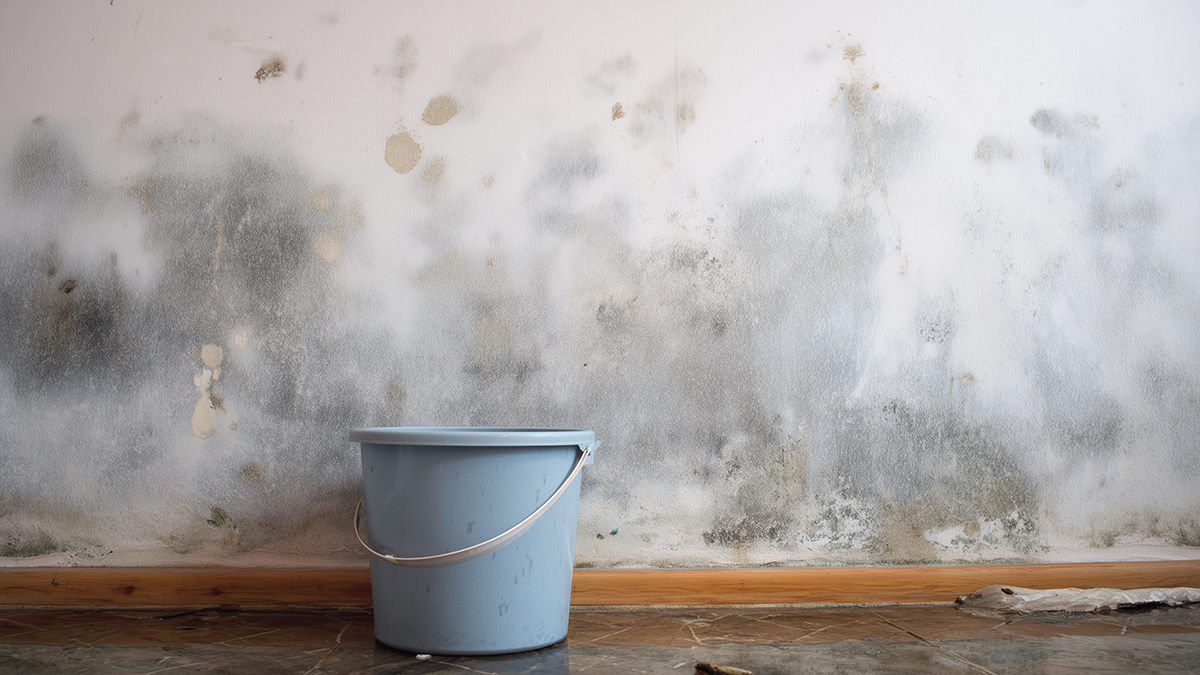
AI generated by Zanna for AdobeStock
Key Points
Researchers at the FAMU-FSU College of Engineering and Florida State University’s Resilient Infrastructure and Disaster Response Center studied homes damaged by Hurricane Ida (2021) and Hurricane Ian (2022) to identify which conditions most increase respiratory health risks after flooding recedes.
The study, published in the Journal of Cleaner Production, found that roof age, indoor mold spore levels and maximum flood depth were the strongest predictors of new respiratory symptoms among residents.
The research matters because it gives homeowners, insurers, health officials and emergency managers a data-based framework for prioritizing limited recovery resources.
Doctoral alumna Maryam Pakdehi led the study, with support from the National Science Foundation and other funders.
Researchers at the FAMU-FSU College of Engineering and Florida State University’s Resilient Infrastructure and Disaster Response Center have identified how hurricane flooding can affect health long after a storm passes.
In research published in the Journal of Cleaner Production, the team identified the factors most likely to create hazardous respiratory conditions inside homes after flooding.

Roof age, prevalence of indoor mold spores and maximum flood depth led to the most new respiratory symptoms among people in the homes researchers studied. Airflow rates in bathroom exhaust fans, how often residents opened window blinds and the airtightness of the building were also important factors.
“We pay a lot of attention to direct impacts immediately after storms, but hazardous conditions can linger after floodwaters recede,” said Assistant Professor Ebrahim Ahmadisharaf, a study co-author. “Although the respiratory health impacts of flooding are indirect and may emerge gradually, timely intervention offers the best chance for supporting health. We wanted to pinpoint which factors were most harmful, because that tells us where intervention can do the most good.”
What Homes Did Researchers Study After Flooding?
The researchers examined residential buildings damaged after Hurricane Ida, which made landfall near New Orleans in 2021 before moving through the Northeast U.S., and Hurricane Ian, which passed through South Florida in 2022. They separated their data geographically into three groups: Louisiana, the Northeast U.S. and Central and Southern Florida.
Working with public health researchers, the team surveyed people whose homes had been affected by the two hurricanes. Because flood-related mold exposure and respiratory effects can persist after major storms, researchers conducted health surveys and mold sampling five to seven months after the hurricanes hit each study area.
The team combined survey results with home inspections, lab analyses of indoor and outdoor mold spores and flood modeling to build a comprehensive building-scale database connecting post-hurricane environmental factors to respiratory health. The database included building properties, indoor human activity, indoor and outdoor mold levels and flood characteristics for each home.
Why Does This Research Matter for Flood Recovery?

Mold has long been known to cause respiratory problems, but this study offers a more systematic look at how post-flood conditions drive the growth of hazardous mold, using a more detailed database than earlier research.
“Knowing the factors that are most likely to affect health gives us a guide for how to intervene before health problems begin,” said Professor Yassir AbdelRazig, a study co-author. “We know that resources for investment—for property owners and for outside agencies—are limited. This study gives a framework for what interventions can have the greatest impact.”
The research could help homeowners, health officials, insurance companies and emergency managers understand where health risks are greatest and target strategies to reduce them.
Could This Research Apply Beyond Major Hurricanes?
Although the researchers studied conditions after major hurricanes, the same problems can develop after storms that don’t make headlines. Nuisance flooding—flooding that doesn’t threaten life or cause major property damage—can still lead to water intrusion and create conditions for mold growth.
Future research could expand the number of buildings surveyed for a more robust analysis of the factors affecting respiratory health. A project using an unoccupied control building could examine the gradual effects of water intrusion over time, giving researchers a clearer picture of how mold develops and affects indoor air quality, Ahmadisharaf said.
“Engineering has a major role to play in improving human health,” he said. “The indoor environments where we spend many hours of our lives are huge drivers of health. This research is about understanding the environment to help improve it.”
Doctoral alumna Maryam Pakdehi and doctoral student Ahmed Suliman were the lead author and co-author, respectively, on this research. The study was supported by the National Science Foundation, the Danfoss Faculty and Graduate Student Fellows program, and an Early-Career Research Fellowship from the Gulf Research Program of the National Academies of Sciences, Engineering, and Medicine.
Editor’s Note: This article was edited with a custom prompt for Claude Sonnet 5, an AI assistant created by Anthropic. The AI optimized the article for SEO/GEO discoverability, improved clarity, structure and readability while preserving the original reporting and factual content. All information and viewpoints remain those of the author and publication. This article was edited and fact-checked by college staff before being published. This disclosure is part of our commitment to transparency in our editorial process. Last edited: 07/29/2026.
RELATED ARTICLES
Civil Engineering Professor Uncovers the Impacts of Hurricane Flooding on Mold Growth
Mapping Vulnerable Critical Infrastructure in Western Florida for Better Disaster Response
Advanced Risk Assessment Identifies U.S. Dams at Critical Overtopping Threshold
FAQ
After flooding, damp building materials create ideal conditions for mold growth. Research from the FAMU-FSU College of Engineering found that roof age, indoor mold spore levels and how deep floodwater reached inside a home were the strongest predictors of new respiratory symptoms among residents.
Mold exposure and respiratory effects can develop or persist for months after a storm. In this study, researchers surveyed residents and sampled mold five to seven months after Hurricane Ida and Hurricane Ian struck the areas studied.
Researchers examined homes damaged by Hurricane Ida, which struck near New Orleans in 2021 and later moved through the Northeast U.S., and Hurricane Ian, which hit South Florida in 2022.
Beyond flood depth, factors including roof age, airflow rates in bathroom exhaust fans, how often residents opened window blinds and how airtight a building was were all linked to respiratory symptoms.
The findings can help homeowners, health officials, insurance companies and emergency managers identify where respiratory health risks are highest after a flood and prioritize inspection, remediation or intervention resources accordingly.
Researchers say the same mold-related health risks can occur after minor or nuisance flooding that doesn’t make headlines, since even limited water intrusion can create conditions for mold growth.