
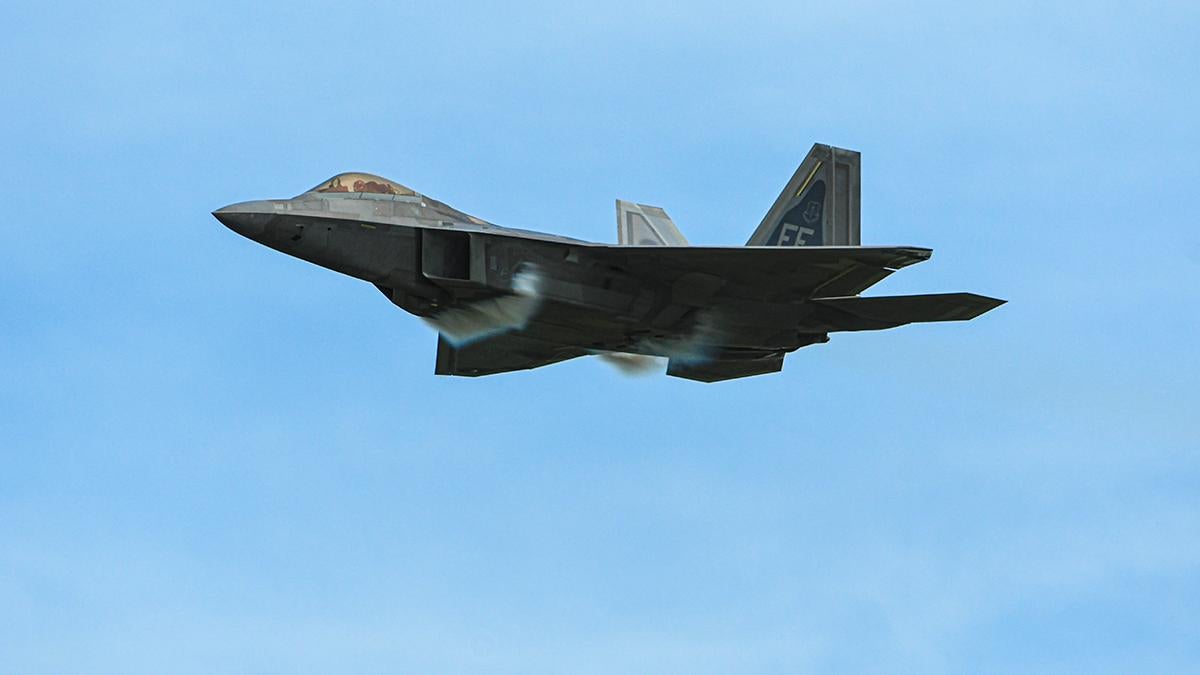
Lockheed Martin Space and Air Show - Sanford Florida USA. By Marty
A Florida State University faculty researcher at the FAMU-FSU College of Engineering has secured a groundbreaking $3.9 million grant from the Air Force Research Laboratory to advance cutting-edge hypersonic technology research.
Leading Innovation in Hypervelocity Research
Rajan Kumar, chair and professor of the Department of Mechanical and Aerospace Engineering and director of the Florida Center for Advanced Aero-Propulsion (FCAAP), will lead this transformative research initiative focused on hypervelocity technology beyond Mach 5.
“Hypersonic is the word in the air right now. Every major aerospace institution is playing a big role,” Kumar said. “For us, it is a natural extension because we were already doing a lot of work up to Mach 5. Now, the plan is to expand it beyond that, going up to higher Mach numbers and trying to understand how hypersonic flows are different.”
State-of-the-Art Equipment and Advanced Diagnostics
The Department of Defense grant will enable Kumar’s team to acquire advanced hardware and sophisticated diagnostic equipment essential for analyzing the complex physics of hypervelocity flows. The project will also focus on developing computational tools necessary for designing next-generation hypersonic flight systems.
“This grant involves many researchers of our MAE department,” Kumar said. “We will be doing some experiments at FCAAP and we will be working with our computational faculty to develop new technologies that are needed for the design and development of next-generation high-speed flight vehicles. This research will be carried out in close collaboration with AFRL scientists and engineers.”

Critical Role of Wind Tunnel Testing
High-speed wind tunnel testing serves as the backbone for hypersonic vehicle development due to its cost-effectiveness compared to actual flight testing. The research team will concentrate on replicating realistic flow conditions in wind tunnels, which proves crucial for obtaining reliable data and driving innovation in aerospace engineering.
Hypersonic aerodynamics present extraordinary complexity, involving shock-boundary layer heating and intricate flow interactions that challenge even the most experienced aerospace engineers working on supersonic aircraft development.
“We have been working with the Air Force Research Laboratory for nearly 15 to 20 years, supporting a range of high-speed projectile development programs,” Kumar noted. “This new grant is designed to enhance our capabilities in understanding hypervelocity flows with more advanced diagnostics and simulate realistic flow conditions in a wind tunnel, which is critical for reliability and data accuracy.”
Transforming Aerospace Engineering Education
This initiative promises far-reaching impact across multiple sectors. The research will provide immediate benefits for ongoing projects and enhance student education at the FAMU-FSU College of Engineering while establishing a foundation for revolutionary advances in high-speed experimental aerodynamics research and training.
The new hypervelocity test facility is expected to serve as a unique shared resource for universities, government laboratories, and industry partners. This collaboration will drive critical advances in hypersonic vehicle development, experimental flow control technologies, and the preparation of diverse engineers and scientists for tomorrow’s aerospace challenges.
“FAMU-FSU College of Engineering is set to become a national leader in hypersonic research,” Kumar says. “This research will support the Department of Defense’s ongoing interests and help to fill crucial gaps in the understanding of high-enthalpy flows at hypersonic speeds.”
Editor’s Note: This article was edited with a custom prompt for Claude Sonnet 4, an AI assistant created by Anthropic. The AI optimized the article for SEO discoverability, improved clarity, structure and readability while preserving the original reporting and factual content. All information and viewpoints remain those of the author and publication. This article was edited and fact-checked by college staff before being published. This disclosure is part of our commitment to transparency in our editorial process. Last edited: 12-16-2025.
RELATED ARTICLES
Department Formalizes Aerospace Identity, Reflecting Decades of Research Excellence
It’s All About the Flow When It Comes to Supersonic Flight
U.S. Air Force funds multifunctional composites collaborative research