
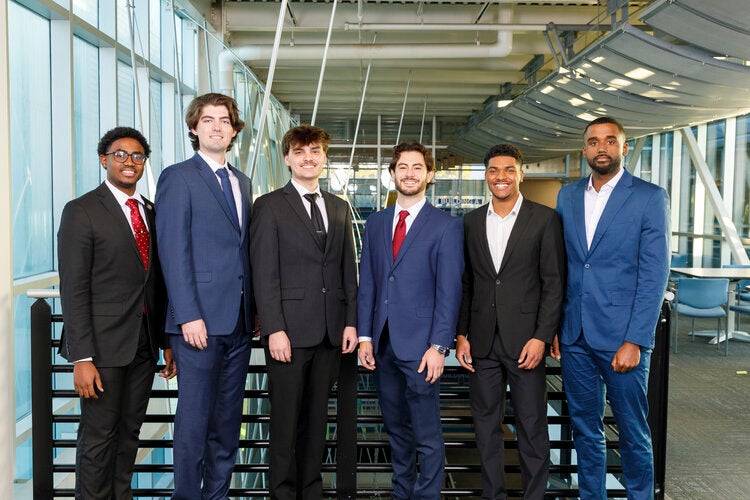
We designed and improved an electronic control and braking system for a hydraulic-powered bicycle competing in the NFPA Fluid Power Vehicle Challenge. Our bicycle combines a chain drive with a fluid power system, using the chain drive to charge accumulators and power the direct drive while fluid power transfers pedaling force to a motor driving the rear wheels.
Our primary objective was to enhance the bicycle’s responsiveness and provide the rider with faster, clearer feedback through an LCD display. We updated the control code from the previous year’s design to reduce delays between rider input and system response and improved display refresh rates so riders could monitor system behavior in real time.
We installed wheel speed and cadence sensors to capture operational data, which we streamed to the LCD display and logged for post-run analysis. This data collection allowed us to identify system behavior patterns and isolate areas for further improvement. The sensor data also enabled our “SmartDrive” mode, in which the regenerative braking system engaged and disengaged automatically based on riding conditions, producing more consistent and controlled system behavior.
Together, these improvements make the bicycle easier to control, more responsive to rider input, and more straightforward to test and refine.