
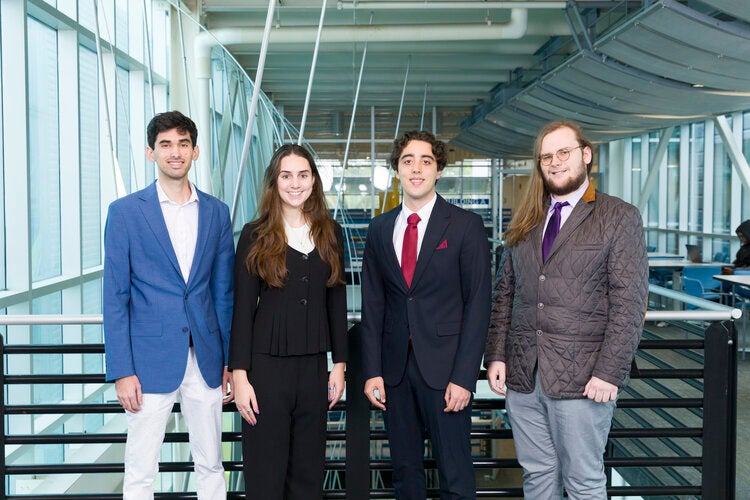
Hearing loss affects over 5.1 million children in the US and properly fitted hearing aids are critical for successful language development and preventing long-term educational and social difficulties. Behind-the-ear hearing aid models are the most common intervention for children with moderate hearing loss, but current devices face limitations in comfort, durability, and adaptability to rapid ear growth. These challenges result in frequent device refitting, inconsistent auditory input, and financial strain for families.
We designed and developed PediaPrints, a pediatric hearing aid system that separated electronic components from growth-dependent earmolds. Our system paired a conventional behind-the-ear hearing aid with patient-specific, 3D-printed earmolds generated through digital modeling using Materialise Mimics software. We utilized 3D scanners and segmentation of ear regions to create digital models, then applied a growth-prediction algorithm based on pediatric ear development to enable earmolds to be digitally re-sized and reprinted as children grow. We manufactured the earmolds using FormLabs biocompatible, flexible medical-grade resin for rapid, low-cost production. The team conducted bench testing to evaluate dimensional accuracy, material properties, durability, and adaptability to different brands of behind-the-ear electronics. Our design accounted for ISO 10993 biocompatibility standards and FDA 510(k) regulations.
By integrating digital modeling, 3D printing, and biocompatible materials, our PediaPrints earmolds aimed to reduce long-term costs, minimize clinic visits, and support auditory development during critical periods. This approach had the potential to improve equity, accessibility, and clinical outcomes in pediatric hearing care.